The Hidden Dangers of AI Models: Preventing Data Poisoning and Attacks

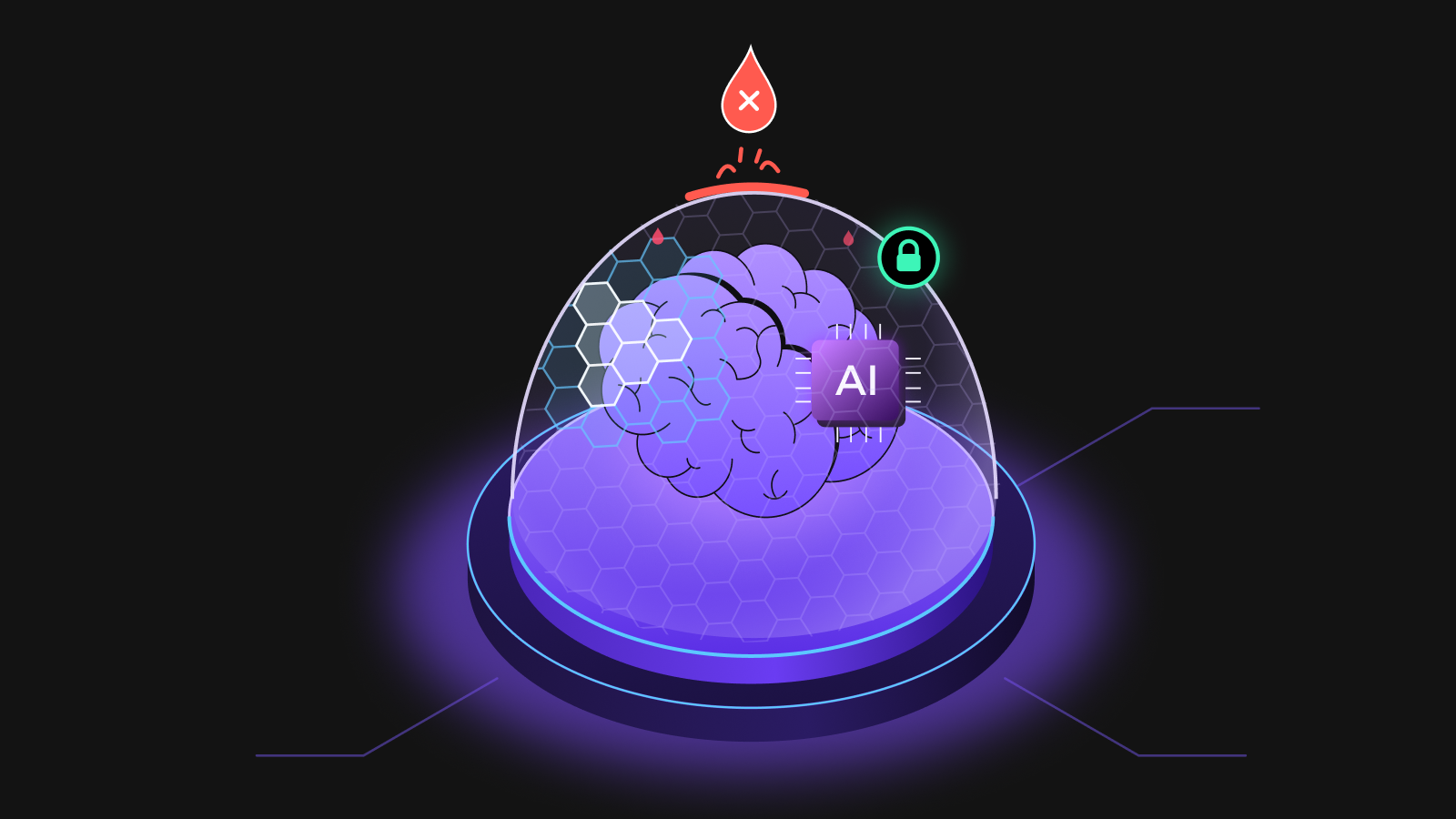
With AI now deeply embedded in how modern organizations make decisions, from approving loans to detecting fraud, diagnosing illness and optimizing supply chains, these AI systems have become more influential.
But they’re also becoming more fragile in ways many teams don’t expect.
It’s not because of system outages or ransomware. It’s because intelligence itself can be quietly manipulated—a phenomenon known as data poisoning.
In this article, we’ll explore how data poisoning attacks work, why they’re so difficult to detect, and what it actually takes to protect AI models from subtle manipulation (especially while they’re running).
We’ll cover:
- What data poisoning is and why it differs from traditional cyberattacks
- How poisoned AI models can cause havoc without warning signs
- Why traditional security tools can’t protect AI during execution
- The growing risk of AI model manipulation during execution
- How Confidential AI prevents tampering even before it happens
The simple truth is that most organizations secure their AI infrastructure, but very few secure the intelligence inside it.
Let’s dive in.
What Is Data Poisoning in AI Models?
Data poisoning doesn’t break systems; it reshapes them.
This is how it happens: instead of attacking infrastructure, attackers manipulate the information AI systems learn from or rely on. Over time, this changes how the model behaves. Sometimes the impact is obvious, but more often, it’s subtle.
A fraud detection system might become more permissive over time, or a recommendation engine might begin to favor certain outcomes. A medical AI system might misclassify cases even while the model still appears to be working.
These types of scenarios are what make data poisoning uniquely dangerous. It introduces misleading inputs into the AI system's lifecycle, which might involve:
- Corrupting the datasets used for training
- Influencing trial-and-error feedback cycles
- Injecting intentionally malicious inputs during inference
- Biasing feedback mechanisms
If an AI model absorbs these signals as if they’re legitimate, from that point forward, it will behave exactly as trained. But certainly not as originally intended.
Here’s How Data Poisoning Attacks Work
Most data poisoning attacks fall into two categories:
- Training poisoning: Malicious data is injected into models during training, causing distorted AI learning that persists long after deployment.
- Inference manipulation: Instead of retraining the model, attackers target inputs at runtime to subtly guide outputs without altering the model itself.
The second type is increasingly common because it doesn’t require access to training pipelines; it only requires influence, which is much easier to achieve than control.
How Do AI Model Attacks Compromise Business Outcomes?
Unlike traditional breaches, poisoned models don’t “crash.” More accurately, they drift.
It’s easy to see why this could cause major headaches, particularly when AI systems are tied to decisions that affect the business as a whole. Even a slight shift could eventually lead to major consequences. What if:
- A risk scoring model quietly becomes less sensitive?
- A supply chain optimizer prioritizes compromised vendors?
- A surveillance AI misclassifies patterns?
The system still runs, dashboards still show performance, and no alarms are triggered. But the decisions are now being made on altered intelligence. And over time, this could create financial exposure, regulatory risk, strategic misalignment or a loss in operational trust
And because AI increasingly “lives” upstream from business actions, corrupted intelligence can ripple outward in ways that make it difficult to trace back to the root cause.
Model Attacks Are Hard to Detect. And Traditional Infrastructure Can’t Stop Them.
Poisoning rarely produces dramatic failures because it tends to look like normal variance. Performance might change slightly, biases could subtly shift, and confidence scores could fluctuate.
Most monitoring tools would consider this expected model behavior, not a compromise. And in some cases, teams might assume the issue stems from data drift or model aging rather than malicious interference. Yet, by the time inconsistencies are investigated, the damage may already be embedded in decision-making processes.
Most organizations focus their defenses on where AI lives, whether it’s cloud environments, AI factories or on-prem clusters. And they typically secure things like storage, networks and access controls.
But AI doesn’t operate securely by default just because you think you’ve secured the infrastructure.
For a model to function, it must be decrypted, training data must be loaded into memory, and inputs must be processed. And at that moment, even well-protected systems expose intelligence inside them.
Runtime is where models are most exposed and where poisoning or manipulation can occur without altering the surrounding environment. This is particularly relevant in modern GPU-accelerated environments, where sensitive workloads operate in shared or virtualized stacks.
The system may be secure, but intelligence may not be.
Confidential AI Prevents Data Poisoning
Confidential AI extends protection to execution because, rather than assuming infrastructure is trustworthy, it requires proof. It does this through:
- Isolation. AI workloads run within hardware-enforced secure environments that protect memory while the model operates.
- Verification. The system verifies the integrity of the runtime environment before allowing sensitive assets to load.
- Controlled access. Model weights and sensitive inputs are decrypted only within approved environments.
This changes the threat level entirely because attackers can no longer rely on influencing runtime behavior when the environment itself must be cryptographically validated before execution.
Why Is Runtime Integrity So Important?
Preventing poisoning doesn’t mean blocking bad data. It’s all about getting the model to run exactly as intended. Runtime integrity ensures that:
- Only trusted software is executed
- Only verified hardware processes the workload
- Only approved environments have access to decrypted models
If the environment deviates even slightly, then access is denied. This prevents silent manipulation, tampering at the memory level, and unauthorized influence at runtime.
In practical terms, this means attackers can’t just “nudge” the model during operation. They first need to compromise a cryptographically verified environment, which is significantly more difficult.
Protecting Intelligence, Not Just Infrastructure
With AI systems now central to how organizations operate, protecting the intelligence itself remains a significant challenge—even as infrastructure security has matured.
Data poisoning doesn’t announce itself or shut systems down. It changes how they think, and it does so quietly. As AI increasingly becomes a key component of decision-making, the ability to trust model behavior is as important as protecting data or uptime.
Confidential AI marks a shift from reactive detection to preventative assurance. Instead of monitoring drift after the fact, organizations can ensure models execute only in verified environments, ultimately reducing the likelihood of silent manipulation before it begins.
Are you ready to protect your organization’s valuable intelligence? If you’d like to see how Fortanix helps secure AI models during execution and reduce exposure to data poisoning risks, request a demo to learn more.