Frontier AI Models Like Anthropic Mythos Will Change How Software Must Be Secured

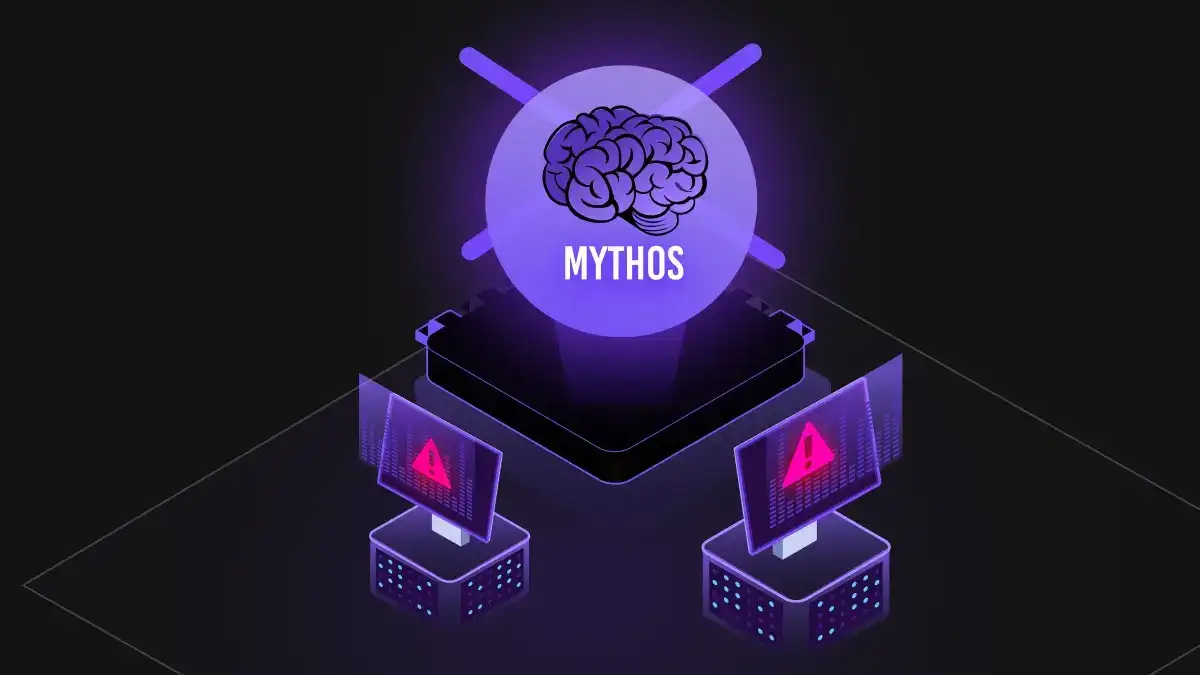
Anthropic’s Mythos represents a new class of frontier AI models capable of assisting with advanced cybersecurity workflows such as vulnerability discovery and exploit-chain reasoning. While Mythos is currently in limited preview, similar capabilities are expected from other frontier labs soon.
These systems will significantly change expectations for software vendors, SaaS providers, and enterprise IT teams.
As the cost of finding vulnerabilities drops dramatically, security must shift from periodic scanning to continuous, AI-assisted assurance.
Software Vendors Must Move to Continuous Security
Historically, vulnerability discovery required specialized expertise. Frontier AI models change that.
Software vendors should now assume that vulnerabilities, especially in open-source dependencies, will be discovered faster than ever before. This creates a new expectation:
Software security must become a continuous engineering process.
That includes:
- AI-assisted vulnerability discovery
- automated remediation workflows
- dependency-level security validation
- SBOM-based transparency across software components
Shipping software with unresolved dependency risk will become increasingly difficult to justify.
Enterprise IT Must Improve Patch Velocity
Enterprise IT teams running third-party software face the same shift.
Security by obscurity no longer works. Running outdated software has always been risky, but AI dramatically increases that risk.
Organizations should prioritize:
- faster patch deployment cycles
- software provenance verification
- dependency transparency
- stronger supply-chain integrity controls
In this environment, patch latency becomes a primary security risk indicator.
Software Supply Chain Security Becomes Critical
AI-assisted vulnerability discovery increases the importance of securing the full software distribution pipeline not just application code.
Organizations must ensure that insecure or malicious components cannot enter:
- build pipelines
- artifact repositories
- container registries
- runtime environments
Technologies such as signed artifacts, reproducible builds, and SBOM validation are becoming foundational security controls.
Confidential Computing Enables Runtime Trust
Continuous vulnerability discovery improves detection—but organizations must also verify how software executes.
Confidential computing provides this missing layer.
Software vendors can distribute signed workloads designed to run inside Trusted Execution Environments (TEEs), and enterprise IT teams can verify workload integrity using remote attestation before execution.
Platforms like Fortanix Confidential Computing Manager enable organizations to enforce these runtime integrity guarantees across cloud, on-prem, and sovereign environments—ensuring workloads execute only within verified trusted infrastructure.
This enables:
- verification of software origin
- protection against infrastructure-level tampering
- stronger supply-chain assurance
- protection of sensitive workloads in memory
Continuous Evaluation + Confidential Execution = Stronger Security
Confidential computing does not replace vulnerability management, it strengthens it.
The strongest posture combines:
- continuous AI-assisted vulnerability discovery
- secure software supply-chain verification
- confidential runtime execution with platforms like Fortanix
Frontier cybersecurity models like Mythos signal an important shift:
Security advantage is moving from who can scan faster to who can prove runtime trust continuously.