How to Know Where Your Search for the Best Cloud Security Solution Ends

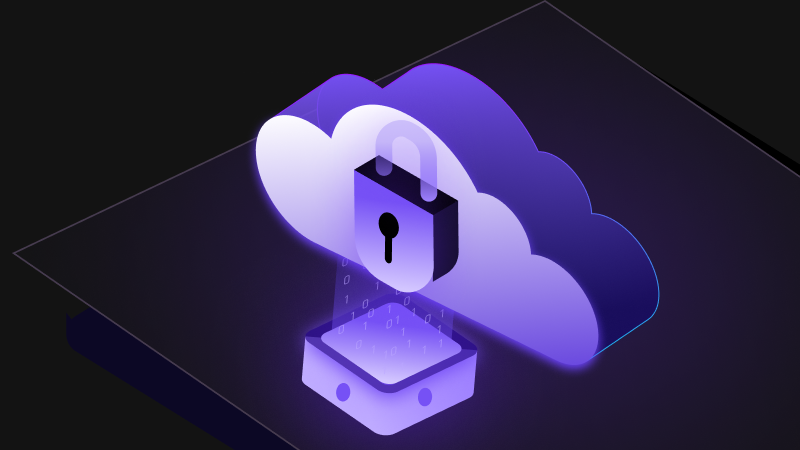
The hunt for the best cloud security solution usually starts with a simple question: “Which solution will actually keep our data safe?”
But then real work begins.
Every vendor insists they have the strongest encryption, the smartest identity controls, or the most “intelligent” automation. But picking up the right security software isn’t only about shiny features. It’s about protection that will still work a few years from now as cloud environments stretch and threats get stranger.
This article will break down how to evaluate cloud security tools without getting caught up in marketing claims. We’ll cover the fundamentals that matter, the components organizations commonly overlook (especially encryption and key management), why post-quantum cryptography suddenly belongs in security conversations, and how to whittle down your options without second-guessing your decision.
We’ll examine:
- What cloud security solution really covers today
- The key capabilities that separate average tools from dependable ones
- A plain-English comparison of modern key management vs. legacy HSMs
- Why PQC is becoming part of buying decisions sooner than expected
- How to judge tools based on futureproofing, not buzzwords
Let’s get started.
What Does a Cloud Security Solution Actually Do?
Cloud security isn’t one product. It’s a set of defenses protecting data, apps, workloads and identities across increasingly distributed environments. Organizations typically patch tools together over time, but fragmentation is exactly what attackers exploit.
The numbers tell the story: the average organization experienced nine cloud security incidents in 2024, with 89% reporting an increase versus the previous year [source]. Misconfigurations, identity mistakes, token theft, and poorly managed keys are all the real culprits. Cloud security software exists to close those gaps with guardrails that don’t depend on human vigilance alone.
The strongest platforms don’t just detect risky behavior. They reduce the number of decisions that humans need to get right.
How to Identify Top Cloud Security Service
It helps to judge cloud security platforms by a single standard: Do they make your data safer no matter where it lives or who touches it? Features may look impressive on paper, but practical capabilities matter more than checkboxes.
Let’s dig into two core areas that always deserve scrutiny.
1. What does strong cloud encryption really look like?
“Military-grade encryption” sounds impressive until you realize it’s an empty phrase. Strong encryption depends on how keys are stored, how fast they can be rotated, and whether you can change algorithms when needed, not just the math used to scramble the data.
A reliable platform should be able to:
- Protect data at rest, in transit, and while being processed
- Manage keys independently from cloud providers’ infrastructure
- Rotate certificates and keys automatically
- Move away from outdated algorithms without a forklift upgrade
The last point, known as “crypto-agility,” is quietly becoming one of the most important differentiators. Encryption that you can’t update will eventually turn into fake security.
2. What should IAM actually control?
Identity and access management gets more complicated every time another cloud service, human user or AI agent is added. Attackers love that complexity. A surprisingly high number of breaches trace back to human involvement, whether through stolen credentials, misuse or error.
Your IAM capabilities should make it difficult to accidentally grant too much access or leave access hanging around indefinitely. That means:
- Real MFA enforcement (not just optional prompts)
- Detailed access policies tied to roles rather than individuals
- Automatic rotation for secrets and credentials
- Oversight for privileged accounts that tracks real-world behavior
If a security team spends half of its time fixing IAM mistakes, then the software isn’t doing its job.
Practical Comparison: Legacy HSM vs. Cloud-Ready Key Management
Most organizations still rely on hardware security modules (HSMs) in some form. The issue isn’t that HSMs are outdated; it’s that older ones were never designed for cloud speed or multi-cloud sprawl.
| Feature | Legacy HSM | Modern Cloud-Smart HSM/Key Management |
|---|---|---|
| Deployment | Installed hardware | Virtualized or cloud-native |
| Updates | Slow and manual | API-driven, automated |
| Elasticity | Fixed capacity | Scales with workload demand |
| PQC Transition | Often limited | Designed to migrate to NIST algorithms |
| Integration | Proprietary connectors | Broad multi-cloud support |
| Cost Structure | Hardware investment | Operational, usage-based |
Ultimately, security that can’t update fast enough will eventually become a liability.
Why PQC Belongs in Your Buying Criteria (Even If You’re Not “Doing Quantum”)
Post-quantum cryptography (PQC) doesn’t show up in most cloud security RFPs yet, but it should. Once viable quantum computers arrive, older encryption methods (particularly RSA and ECC) could be broken in a fraction of the time they’re designed to withstand. Attackers are already capturing traffic today with hopes of decrypting it later. This strategy is called “harvest now, decrypt later,” and it’s surprisingly common.
NIST has chosen an initial suite of quantum-resistant algorithms and recommends that organizations begin inventorying their cryptographic assets and planning transitions now.
Cloud security tools that rely on rigid cryptography or non-upgradable HSMs could leave enterprises stuck with vulnerable encryption. That’s why the platforms you choose today should support discovery, assessment, and crypto-agility, not just encryption itself.
Here’s where this hits home for Fortanix customers:
- Key Insight helps organizations discover where existing cryptography is used and how risky it is.
- Data Security Manager (DSM) provides policy-driven crypto-agility and PQC transitions across clouds.
How to Narrow Your Options Without Second-Guessing Yourself
A useful way to end your search is to ask questions that reveal how a tool behaves in real-world scenarios, not idealized demos.
Questions eorth asking every vendor include:
- Can we apply one encryption strategy across every cloud we use?
- How are keys stored, and can we manage them separately from providers?
- If an employee leaves a credential leak, how fast can access be revoked everywhere?
- Does the platform reduce manual tasks, or just alert us to them?
- What happens when NIST’s PQC standards become mandatory?
Meanwhile, here are some red flags that usually predict future pain:
- Encryption tightly coupled to a single vendor’s infrastructure
- HSMs that require hardware purchases to scale
- IAM systems that rely on “trust by default”
- No roadmap (or credibility) around post-quantum readiness
When in doubt, follow one simple rule: Security tools should reduce complexity, not create more.
The Best Cloud Security Services Protects You Today and Adapts Tomorrow
Your search ends when you find a solution that’s secure now and won’t leave you scramble later. The best cloud security software should:
- Protect data everywhere it moves
- Support fast, automated key and certificate management
- Adapt to new encryption standards without downtime
- Stay independent of cloud providers while still working across them
- Prepare you for PQC, even if you’re not implementing it yet
If you’re exploring ways to simplify cloud encryption, manage keys intelligently, or prepare for quantum-resistant security, it’s worth seeing how Fortanix approaches the problem.
Take a quick look at Key Insight and Data Security Manager or request a demo to see how crypto-agility and unified data security work in practice.