The Enterprise AI Trust Fall: Why Regulated Companies Send Sensitive Data to Infrastructure They Don't Trust

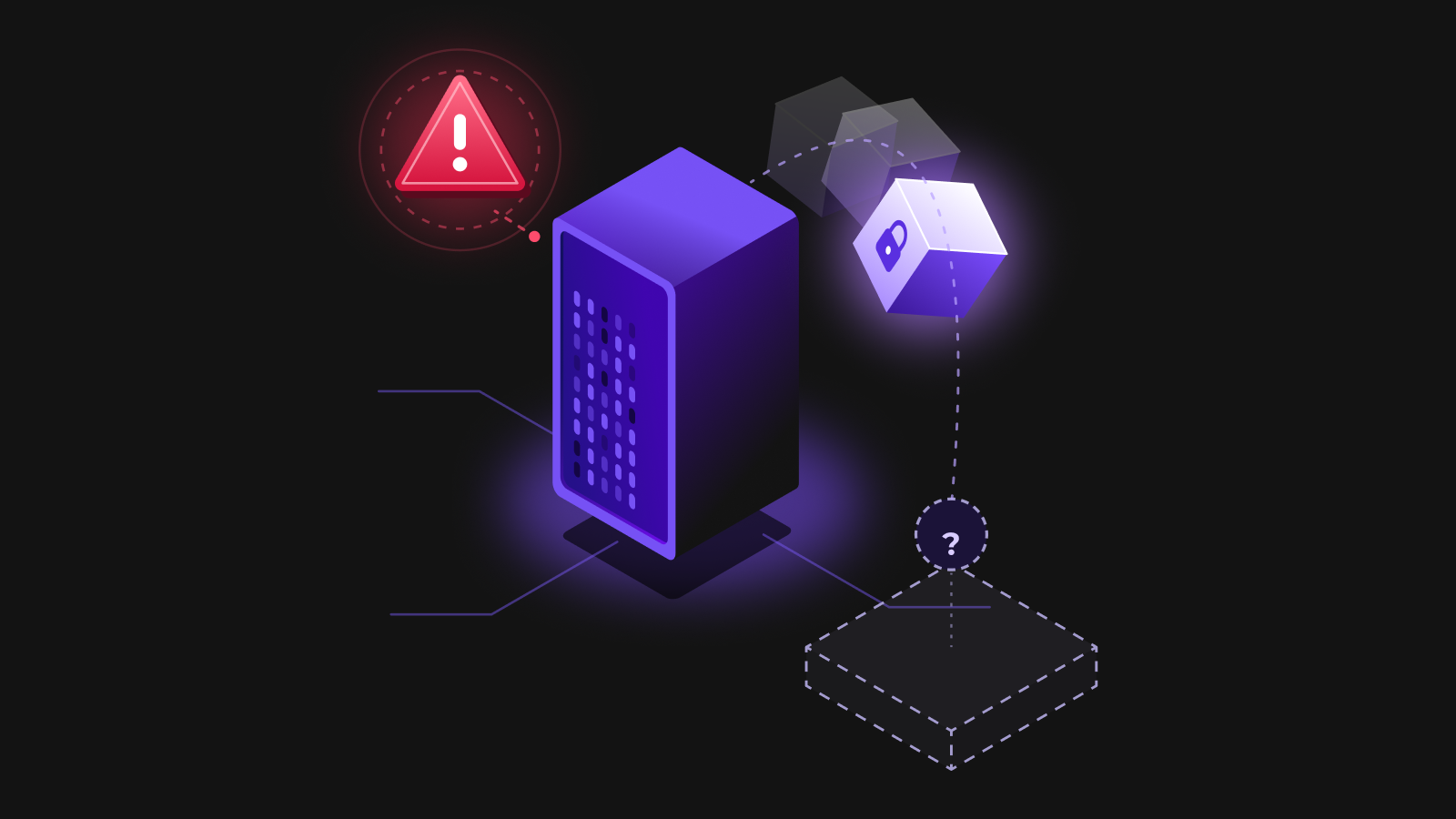
A trust fall works because you believe someone will catch you. But for enterprise AI, it's a completely different story.
In this case, companies will willingly fall backward knowing there is no trusted infrastructure there to “catch” them.
Fortanix’s new “State of Enterprise AI Deployment” survey, conducted by Atomik Research, painted that picture. Three hundred AI leaders across banking, financial services, healthcare, insurance and government shared some alarming information. A large majority, 93%, say they're concerned about exposing proprietary prompts, models, or intellectual property to the companies running their AI infrastructure, and nearly 40% call themselves "very concerned."
Yet 61% of their organizations send sensitive data to public cloud AI services anyway.
These organizations aren’t careless. In fact, they're some of the most heavily regulated companies in the country, and they understand there is a risk at hand. But they're diving in anyway because sitting out of this AI wave isn't an option.
Awareness Isn’t the Problem
For a long time, the security conversation around data in use was mostly for educational purposes, but that’s now over. A full 93% of AI professionals understand that traditional encryption keeps data safe when it’s stored or when it’s transferred, but not during processing.
That’s when AI needs it most, since it processes data during inference.
Organizations are aware, and most are taking action. Companies are adding data masking (62%), tokenization (59%), confidential computing (53%), trusted execution environments (51%), and homomorphic encryption (30%), and most run several at once. They're also limiting what reaches AI systems in the first place, starting with customer data (60%) and financial data (56%).
So if everyone knows the risk and everyone's deploying protections, why the hesitation?
Half Can't Prove Their Protections Work
Only 50% of AI leaders can fully verify that sensitive data stays protected while a model is processing it. And 46% can only partially verify it. The rest can't verify it at all or simply don't know.
To reiterate: 93% know the risk exists, but only half can prove they've covered it.
Confidence looks the same way, with 44% saying they’re "very confident" their data is protected during inference, while 52% are only "somewhat confident." Combined, that sounds reassuring. In practice, "somewhat confident" isn’t an answer a regulator, auditor or a board wants to hear.
If you can’t prove the data is safe, some organizations' go-to option is to do nothing at all. In the past 12 months:
- 59% of organizations delayed an AI project because of data security or privacy
- 41% stopped an AI deployment
- And another 31% gave very serious thought to doing the same
Together, the latter two mean 72% of AI practitioners have faced the question of whether to kill the project.
The culprit isn’t always hackers; it’s regulators. In 46% of cases, compliance was identified as the single largest challenge to AI deployments in sensitive environments, followed by data exposure (34%) and exfiltration (19%). To make things even worse, regulatory pressures have increased fears about AI data security in 87% of organizations during the past year.
Enterprises make risky decisions, and as long as they can't validate safety, compliance teams block the process. This creates a peculiar middle ground where sensitive data goes into public cloud AI and highly valuable projects stall.
What it Takes to Develop Trust
The top choice for increasing confidence when using AI with sensitive data was "advanced infrastructure security such as Confidential Computing" (38%).
This makes sense considering the problem. The top minds in AI don't need yet another reminder about how data becomes vulnerable during processing. What they need is cryptographic proof that the environment performing the processing is safe from tampering and attack, regardless of where it resides.
That means on-premises, hybrid, or even hosted by a third party.
Confidential AI is the best way to get that proof, but the challenge is attestation. There are a lot of moving parts: a GPU-accelerated AI workload touches a confidential GPU, firmware, drivers, and the model itself. Each component and hardware vendor could have its own service, and every firmware update changes the expected state of the environment.
Attestation cryptographically verifies the entire stack is untampered, but most security teams don't have the expertise to do this on staff.
Fortanix Confidential AI performs composite attestation across the CPU, GPU, firmware and the full software stack as one unified chain of trust, then ties the result directly to key release.
Model weights and datasets stay encrypted through distribution and deployment. Fortanix Data Security Manager releases decryption keys only into an environment that passes attestation, and the weights decrypt only inside a verified trusted execution environment (TEE).
If anything fails for any reason, whether firmware or unauthorized software, no keys are released and the workload won't run.
Without that proof becoming a standard, the enterprise AI trust fall game will persist: Some players falling backward with blind hope, and others unwilling to fall at all. The first players to verify will be the ones who stop putting off AI implementation and start shipping it.
For more insights and to download a full copy of the “State of Enterprise AI Deployment” survey report.