Why Confidential AI Is Now a Business Necessity

AI moved from experimental to production infrastructure much faster than anyone could have anticipated.
Company boards, many of which knew very little about AI even five years ago, are now asking, “Where is our AI strategy?” Meanwhile, business units are launching pilots with public APIs and developers are wiring AI into customer support, analytics, HR and finance workflows.
But when I speak with CIOs and CISOs, especially in regulated industries I hear the same thing: “We want to use AI on our most valuable data. We just don’t trust that we can do it safely.”
That trust gap is exactly why confidential AI is no longer optional.
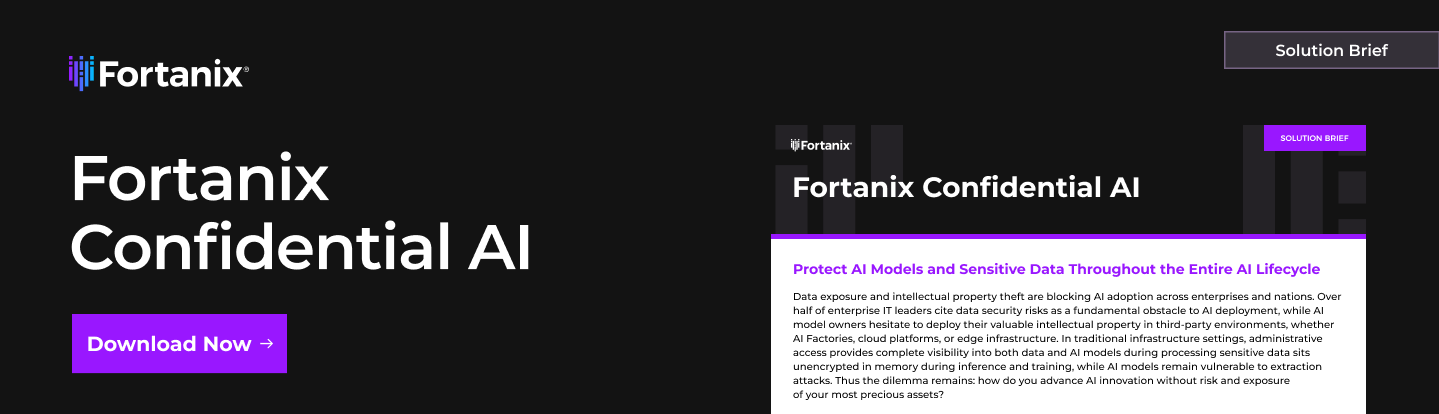
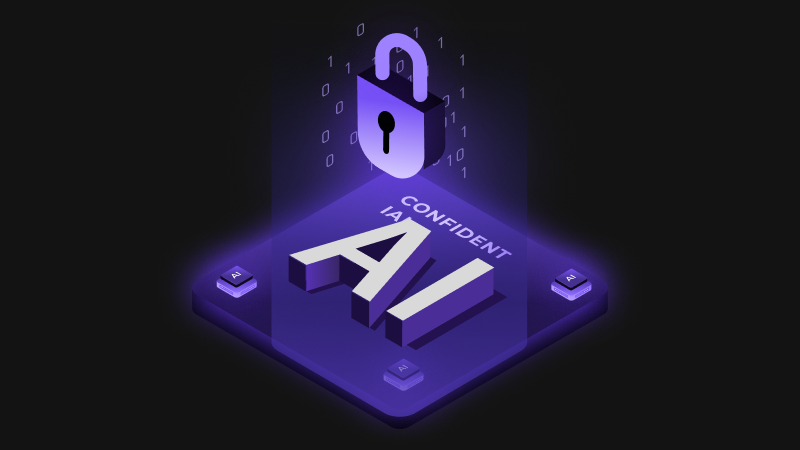
Confidential AI isn’t a buzzword. It’s an architectural approach that combines confidential computing with AI pipelines to protect model weights, user data, and enterprise context end to end, while still allowing organizations to unlock AI’s value in production.
Let’s unpack why this matters now.
The Real Problem: AI Is Scaling Faster Than Trust
Over the past two years, AI pilots have exploded across enterprises:
- Developers use copilots for code.
- Marketing and sales teams generate content and outreach, frequently integrating lead generation automation to streamline the top-of-funnel process while maintaining personalization.
- Internal chatbots search across SharePoint, Slack, and Confluence.
But when organizations try to bring high-sensitivity workloads into scope — payments, trading systems, healthcare records, government data — things slow down.
They run into three hard realities.
1. AI Amplifies Data Exposure
When you connect LLMs to your corporate graph, you’re not just making data searchable, you’re dramatically lowering the barrier to accessing sensitive information. Organizations connect AI systems to internal knowledge sources, they also need strong identity governance and access controls. This includes ensuring that former employees no longer retain access to sensitive systems, documents, or AI-enabled workflows, particularly when managing outreach accounts with the safest linkedin automation tools. Modern employee offboarding solutions help enterprises reduce this risk by automating access removal, credential deprovisioning, and compliance checks as part of a broader AI security strategy.
One organization discovered that passwords stored in a SharePoint document became retrievable simply by asking the AI assistant the right question.
AI doesn’t create new data. It makes existing data far easier to extract, aggregate, and misuse.
2. CISOs Become the Brakes
There’s tension inside nearly every large enterprise:
- Business teams: “We need AI to stay competitive.”
- Security teams: “We cannot lose control of PII, PCI, PHI, or trade secrets.”
Executives know the stakes. The cost of a breach runs into the millions before you even factor in reputational damage and regulatory fines.
So what happens?
AI projects are restricted to low-risk data. Or they stall in proof-of-concept mode and never reach production.
3. Security Is Still Bolted On
Most AI security today looks like the last generation of security:
- API gateways and firewalls
- Prompt filtering and content checks
- Observability tools to detect “shadow AI”
These controls matter. But they wrap around systems that are still fundamentally exposed at runtime.
Security should be built in, not layered afterward.
The New Crown Jewels: Models, Prompts, and Context
When you deploy real-world AI, you are handling three critical assets:
- Model weights. These represent the intellectual property of your AI system. If stolen or tampered with, your competitive advantage disappears.
- User prompts and responses. These often contain PII, PCI, PHI, trade secrets, legal documents, or source code.
- Enterprise context. SharePoint files, Slack history, databases, data warehouses are the information that makes AI useful and differentiating.
If you secure only one of these layers, you haven’t solved the risk.
Why “Just Use Open APIs” Isn’t Enough
Open LLM APIs are fantastic for experimentation. They offer speed, elasticity, and minimal operational burden.
But regulated enterprises quickly encounter constraints:
- Data sovereignty requirements
- Model governance and audit expectations
- Strict limits on data exposure risk
If you cannot clearly answer where your model runs, how your data is handled, or how the environment is secured, you’re operating in a grey zone.
The natural evolution for many enterprises is toward closed-weight deployments, encrypted models running in environments they control or explicitly trust.
But even that isn’t enough unless the runtime itself is protected.
That’s where confidential AI enters.
What Confidential AI Actually Means
Confidential AI applies confidential computing to the entire AI pipeline.
Confidential computing uses hardware-based Trusted Execution Environments (TEEs) to protect data while it is in use, not just at rest or in transit.
Inside these environments:
- Memory is encrypted
- The system can be cryptographically attested
- Even infrastructure administrators cannot inspect raw data or model weights
Applied to AI, this means:
- Model weights remain encrypted and are decrypted only inside verified enclaves.
- Prompts and enterprise context are processed within protected runtime environments.
- Encryption keys are released only after hardware and workload attestation succeed.
This is what turns policy-based security into provable security.
The Four Pillars of Real Confidential AI
From our work across sovereign AI projects and regulated industries, four pillars consistently define a credible, confidential AI architecture.
1. Trust: Verifiable Attestation
You must be able to cryptographically verify that workloads are running on trusted hardware and untampered software stacks before releasing sensitive keys.
If you can’t prove it, you can’t trust it.
2. HSM-Grade Key Management
Keys must be managed in hardened, FIPS-certified systems with full lifecycle controls. Decryption keys should only be released to workloads that present valid attestation evidence.
Confidential AI without strong key management is an illusion.
3. A Turnkey Confidential AI Layer
Enterprises don’t want to cobble together 10 or more security tools and hope they fit together. Luckily, this can be avoided with integrated orchestration that supports RAG pipelines, fine-tuning, inference and policy controls, all within confidential environments.
You also need to isolate workloads. HR data should be separate from legal, legal should be separate from M&A, and so on.
4. Sovereignty by Design
Confidential AI must support deployment wherever regulations demand:
- On-premises
- Sovereign AI data centers
- Specific cloud regions
Keys must stay in the appropriate jurisdiction. Data must remain within allowed boundaries. Compliance must be demonstrable, not aspirational.
If any one of these pillars is missing, you don’t have confidential AI, you have a partial workaround.
Why This Is a Business Decision, Not Just a Security One
Confidential AI is not merely about reducing risk. It unlocks growth.
For model providers, it enables encrypted distribution of proprietary models into customer or third-party AI factories without losing control of IP.
For enterprises, it turns “no” into “yes”:
- Yes, we can use AI on payment data.
- Yes, we can deploy AI over healthcare records.
- Yes, we can operate in regulated markets and meet sovereignty requirements.
And critically, this must happen while AI factories are being built, not years later.
If security is not embedded now, organizations will eventually face the painful task of retrofitting trust into infrastructure that was never designed for it.
If You’re Building AI Infrastructure Today
Over the next 12 months, every organization building AI capabilities should be able to answer four questions:
- Can we cryptographically verify the trustworthiness of our hardware and workloads?
- Is our key management HSM-grade and attestation-gated?
- Do we have an integrated confidential AI platform or are we hand-wiring components?
- Can we meet sovereignty and regulatory requirements today, not years from now?
If the answer to any of these is unclear, that’s the gap confidential AI is meant to close.
AI factories are quickly becoming core production infrastructure.
The organizations that build in confidential AI now will be the ones that can safely move their most valuable workloads and most sensitive data into AI-first environments.
Those who treat security as an afterthought will eventually discover that trust is much harder to retrofit than to design in.
Confidential AI is how we avoid repeating that mistake.