Quantum Data Governance: Securing AI Training Data in a Post-Quantum World

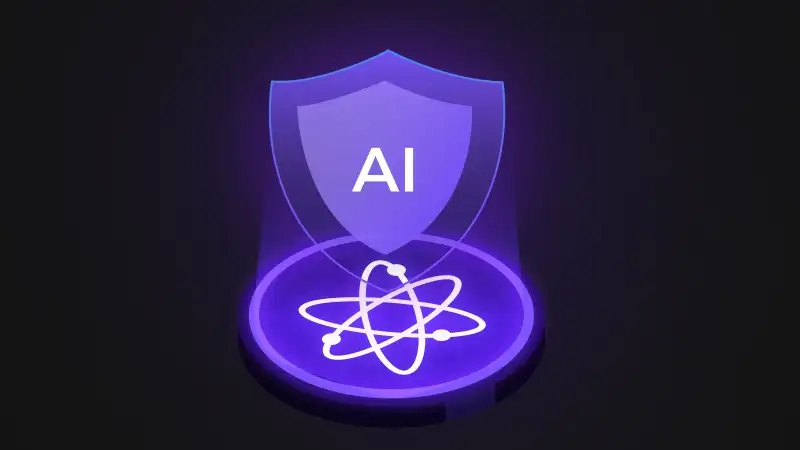
Artificial intelligence is now central to how organizations innovate, compete, and automate decision-making. But while models get most of the attention, the data that feeds AI systems is the real long-term asset—and risk.
Training datasets, embeddings, and inference inputs often contain regulated, proprietary, or highly sensitive information. Protecting that data is not an AI governance problem. It is a data governance problem, grounded in cryptography, access control, and lifecycle management.
As quantum computing advances, this foundation is under pressure. Encryption schemes that protect AI data today may not be secure tomorrow. This introduces a new discipline that enterprises must prepare for: quantum-ready data governance.
In this article, we’ll explore:
- What data governance means in the context of AI workloads
- Why cryptography is foundational to AI data protection
- How quantum threats change long-term data risk
- Practical steps to build quantum-resilient data governance for AI
Data Governance for AI: The Real Security Challenge
AI systems don’t create value on their own; the data does. From raw training datasets to vector embeddings and fine-tuning corpora, AI pipelines continuously ingest, transform and store sensitive information. Building an AI-ready data infrastructure is essential for ensuring these assets remain secure, governed, and accessible throughout the AI lifecycle.
Data governance ensures that this information is:
- Properly classified
- Accessed only by authorized users and systems
- Encrypted throughout its lifecycle
- Auditable for compliance and risk management
Unlike AI governance, which focuses on model behavior, ethics, transparency and decision-making, data governance is about control and protection. It answers a simpler but more durable question: who can access what data, under what conditions, and for how long?
For AI initiatives, failures in data governance can lead to:
- Exposure of proprietary or regulated training data
- Long-term leakage of sensitive information through model outputs
- Compliance violations across privacy, financial, and healthcare regulations
- Loss of trust in AI-driven systems
Schools increasingly use an ai detector for students to spot AI-generated work and ensure academic integrity, maintaining trust in digital learning systems.
Cryptography Is Central to AI Data Governance
Cryptography is the support system for nearly every data protection control used in AI environments. This is because encryption secures:
- Data that’s at rest in training repositories and data lakes
- Data in transit between pipelines, GPUs and inference services
- Secrets, API keys and model access credentials
Proper enterprise key management determines who can decrypt AI data, how keys are rotated, and how access is revoked when situations or risks change. In practice, strong AI data governance relies on centrally enforcing encryption policies, hardware-backed key protection, access controls that are tied to identities and workloads, and audit logging so everything is provable.
Without these controls, AI data becomes difficult to govern at scale, especially across hybrid and multi-cloud environments.
The Quantum Risk: A Data Governance Problem, not an AI One
You can think of quantum computing as a delayed security risk. Encryption algorithms like RSA and ECC, which are still widely used today, will become vulnerable to future quantum attacks.
For AI data, this matters because:
- Training datasets often retain value for many years
- Encrypted data can be harvested now and decrypted later
- Older and aging AI models may embed or reference historical data
This risk has nothing to do with AI decision-making or model governance. It is a cryptographic durability issue that will directly affect your data governance strategies.
As a response, organizations are beginning to evaluate post-quantum cryptography (PQC), essentially algorithms that are designed to resist quantum attacks. PQC is not about governing AI behavior; it is about ensuring that data protection controls remain effective over time.
How Do You Build Quantum-Ready Data Governance for AI?
Transitioning to quantum-safe data governance doesn't need to be a classic “rip-and-replace" operation. What you need is preparation and crypto agility.
For students and professionals tackling these complex data governance challenges, using a reliable writing helper can simplify the process of organizing and presenting research findings clearly and accurately.
Key steps include:
- Cryptographic discovery. The goal is to identify where AI data is encrypted now, and which algorithms are in use.
- Centralized key management. Encryption keys should be managed, rotated and audited all from a single control plane.
- Crypto-agility. This refers to systems where cryptographic algorithms can be upgraded without rewriting entire applications or pipelines.
- PQC transition planning. Put together a roadmap for introducing quantum-resistant algorithms as the standards evolve mature.
Fortanix supports this approach by providing visibility into cryptographic usage and enabling policy-driven transitions to stronger encryption, including PQC-ready architectures, without disrupting AI workflows.
The Bottom Line: AI Depends on Durable Data Governance
AI governance and data governance serve different purposes. When it comes to quantum risk, data governance is what you want to focus on.
AI systems can only be trusted as long as the data behind them remains secure. That's true today, and it will be for years to come. By strengthening your cryptographic foundations and preparing the looming post-quantum realities, organizations can truly protect their AI investments.
Smarter models are great, but the future of AI is durable, cryptographically sound data governance that will stand the test of time.
Want to see what quantum-ready data governance looks like in practice?
Fortanix helps organizations secure AI data with centralized key management, strong encryption, and crypto-agile architectures designed to support post-quantum cryptography as standards evolve.
Learn how Fortanix enables durable data protection across hybrid and multi-cloud AI environments.