What Hybrid Cloud Data Security Will Demand in the Next Few Years

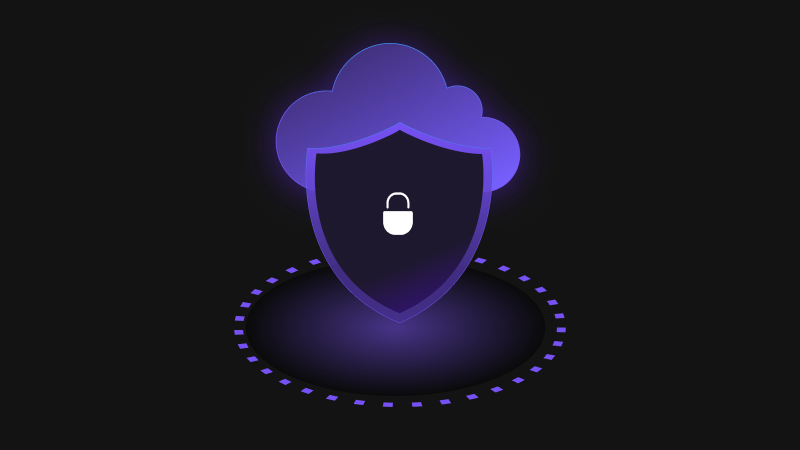
Hybrid clouds have become a relatively common reality. Most organizations now spread their workloads across on-premises systems, private data centers, and multiple public clouds. It’s a mix that gives IT teams flexibility and resilience, but it also creates a host of security challenges that didn’t exist when data lived in just one place.
With this backdrop, two common questions have emerged: How is hybrid cloud data security evolving? And what’s likely to matter most over the next few years? Here, we’ll dive into the pressures driving change, the unique hurdles of protecting sensitive information in hybrid setups, the cryptographic shift on the horizon, and practical steps organizations can take today.
What Hybrid Cloud Actually Means for Data Security
Before we dive into trends, let's first examine what “hybrid cloud” means in practice. The term gets used loosely, but the security implications depend on the specifics.
A hybrid cloud environment is where an organization runs workloads and stores data across a combination of on-premises infrastructure, private data centers, and one or more public clouds, often simultaneously.
As a basic example, a hospital might store patient records on premises for compliance reasons while running analytics workloads on AWS. Or a financial institution might keep core banking systems in a private data center while using Azure for customer-facing applications.
What makes this challenging from a security standpoint is that each environment has its own encryption standards, its own key management system, its own identity and access controls, and its own audit logging format. But data moves between these environments constantly, making each crossing point a potential gap.
The result is that most hybrid cloud organizations end up with fragmented encryption coverage and no unified view of who controls the keys protecting their most sensitive data. That fragmentation exposes weaknesses that attackers look for, and Fortanix helps solve.
Why Is Hybrid Cloud Data Protection Becoming Harder?
The most significant shift in recent years is that sensitive data no longer sits in one location like it did in the old days. It regularly moves between on-premises apps, SaaS providers, and multi-cloud environments, and each of these transfers introduces a chance for an error, oversight or attack.
The average cost of a breach in a hybrid environment is approaching $5 million, which is higher than breaches in cloud-only or on-premises setups. This is real money with real consequences, reflecting the complexity of managing policies, controls, and monitoring tools across environments that don’t naturally “talk” to each other.
The core questions many CISOs now wrestle with include:
- How do we apply consistent controls when every cloud provider has its own way of doing things?
- Can we spot sensitive data no matter where it lands?
- And how do we keep regulators happy when laws differ from one region to another?
These aren’t minor operational headaches. They’re board-level risks.
What Makes Hybrid Cloud Data Security Different?
Traditional tools weren’t built with this landscape in mind. Data protection in hybrid cloud environments brings its own set of challenges:
- A larger attack surface: Every new service or cloud provider you add brings with it new doors and windows that need locking.
- Regulation overload: From GDPR in Europe to HIPAA in healthcare and newer acts like India’s DPDP, rules are multiplying. Proving compliance across clouds is an ongoing project.
- Inconsistencies across providers: AWS, Azure, Google Cloud, and private systems all have different identity, encryption, and audit standards. Unifying them is the goal, of course, but doing so is easier said than done.
- Blurred responsibility lines: A “shared responsibility” model often leaves gaps, with teams assuming the provider has secured something when it might actually be their job.
These challenges share a commonality: there’s no single control plane that spans the entire environment. When each cloud provider manages its own keys, rotation schedules will be different, access policies inconsistent, and audit logs will all live in separate systems, resulting in a patchwork that's difficult to track, harder to enforce, and nearly impossible to accurately audit.
Fortanix Data Security Manager (DSM) addresses this gap in a way that cloud-native tools can’t. It’s essentially a unified key management control plane across on-premises, private cloud, and multi-cloud environments that allows teams to enforce consistent encryption policies, centralize key lifecycle management, and create a single audit trail regardless of where all of the data lives. Rather than simply accepting the fragmentation, organizations can impose a consistent cryptographic standard across every environment through a single platform.
Hybrid Cloud Security Trends That Will Shape the Next Few Years
Several forces are pushing hybrid cloud data security in new directions. These are the things we’re watching that will likely impact data security over the next handful of years:
- Zero trust by default. The days of trusting the corporate network perimeter are over. “Never trust, always verify” is now the standard operating model, and in a hybrid cloud environment, this means enforcing identity and encryption controls that follow data across every environment.
- Confidential Computing. Sensitive workloads will increasingly run in secure enclaves, so even cloud providers can’t peek at data in use. Nearly half of the organizations are already using Confidential Computing, and that number is expected to rise. For hybrid cloud teams, the security boundary extends to the moment of active computation. Fortanix Confidential AI extends this protection specifically to AI workloads to ensure model weights and inference data remain encrypted in memory even during active processing.
- Compliance automation. Regulators want proof that you’re compliant, not promises. Automated audit trails and posture management help teams avoid manual fire drills. Fortanix DSM’s centralized audit logging provides a single, tamper-evident record of key access and usage across all environments, giving compliance teams the documentation they need without making them manually aggregate logs from each cloud provider.
- Centralized key control. As the use of encryption spreads, organizations will need one source of truth for managing keys across on-premises, SaaS, and cloud environments. This is Fortanix DSM’s core function, eliminating the fragmentation that makes hybrid cloud security so difficult to consistently enforce.
The common thread? Security that is continuous and portable. In other words, security follows the data instead of being locked into a single environment.
The Quantum Factor: Preparing for PQC
There’s another curveball looming on the horizon: quantum computing. Most of today’s asymmetric encryption (such as RSA or ECC) will be broken by a sufficiently powerful quantum computer. That risk may still feel distant, but it’s not. And transitions in cryptography don’t happen overnight.
In a hybrid cloud environment, encryption algorithms are spread across cloud-native services, on-premises applications, APIs and third-party integrations, and each potentially has different cryptographic standards. Before organizations can migrate to post-quantum cryptography, they need a complete inventory of where vulnerable algorithms are in use, and in hybrid environments, that inventory doesn't exist by default.
For hybrid cloud teams, PQC raises two urgent tasks. The first step is identifying vulnerable algorithms, which can be challenging when apps, APIs, and third-party services use encryption in different ways. The second is planning your migration, as ripping and replacing crypto across hybrid systems requires time and coordination.
This is where crypto agility becomes essential. Fortanix addresses both challenges directly: Fortanix Key Insight discovers and maps existing cryptographic assets across hybrid environments, then Fortanix Data Security Manager manages the transition, supporting NIST-approved post-quantum algorithms and providing centralized key management without disrupting existing workflows.
Action Plan: The Practical Moves for Stronger Hybrid Cloud Data Protection
The organizations that adapt best are likely to follow a few key practices:
Encrypt everywhere: At rest, in transit, and in use. In a hybrid cloud environment, this means enforcing encryption standards that apply across every cloud provider and on-premises system.
Centralize key management: A single point of visibility reduces both operational headaches and audit risk. Fortanix DSM provides that single point across the entire hybrid stack.
Discover and classify data: You can’t defend what you can’t find. Automated discovery tools help locate sensitive data before attackers do.
Integrate monitoring: Hybrid environments need security monitoring that cuts across providers. Fortanix DSM’s unified audit logging consolidates key usage events into a single record regardless of which environment generated them.
Start PQC planning now: Even a simple discovery project can highlight where vulnerable cryptography sits today. Fortanix Key Insight makes that discovery systematic across environments.
An effective first step is to map out where critical information lives, how it moves, and what cryptography protects it. In hybrid cloud environments, Fortanix Key Insight can power that assessment and give teams a consolidated look at cryptographic coverage across every environment in the stack.
Build Resilient Hybrid Cloud Data Security That Works for You
Hybrid cloud strategies are here for the foreseeable future. So, the question isn’t whether organizations will use hybrid cloud setups, but how well they’ll protect their data as complexity increases.
The core challenge of hybrid cloud security is fragmentation across different environments, key management systems and encryption standards. Fortanix DSM unifies it all with a hardware-backed key management layer that creates consistency across on-premises, private cloud, and multi-cloud environments, so that sensitive data is protected to the same standard wherever it lives.
In the coming years, winning strategies will:
- Treat hybrid cloud data protection as a business priority, not an added-on IT task.
- Invest in visibility and key management that span environments.
- Begin preparing for PQC so the eventual migration is controlled, not chaotic.
The organizations that win will be those that stop reacting and start shaping their hybrid cloud security posture today.
Curious how Fortanix helps unify key management across hybrid cloud environments and prepare for post-quantum cryptography? Request a demo to see Fortanix Data Security Manager and Key Insight in action across your real hybrid cloud stack.